
How to Build a Tiered Buffet Display That Looks Professional
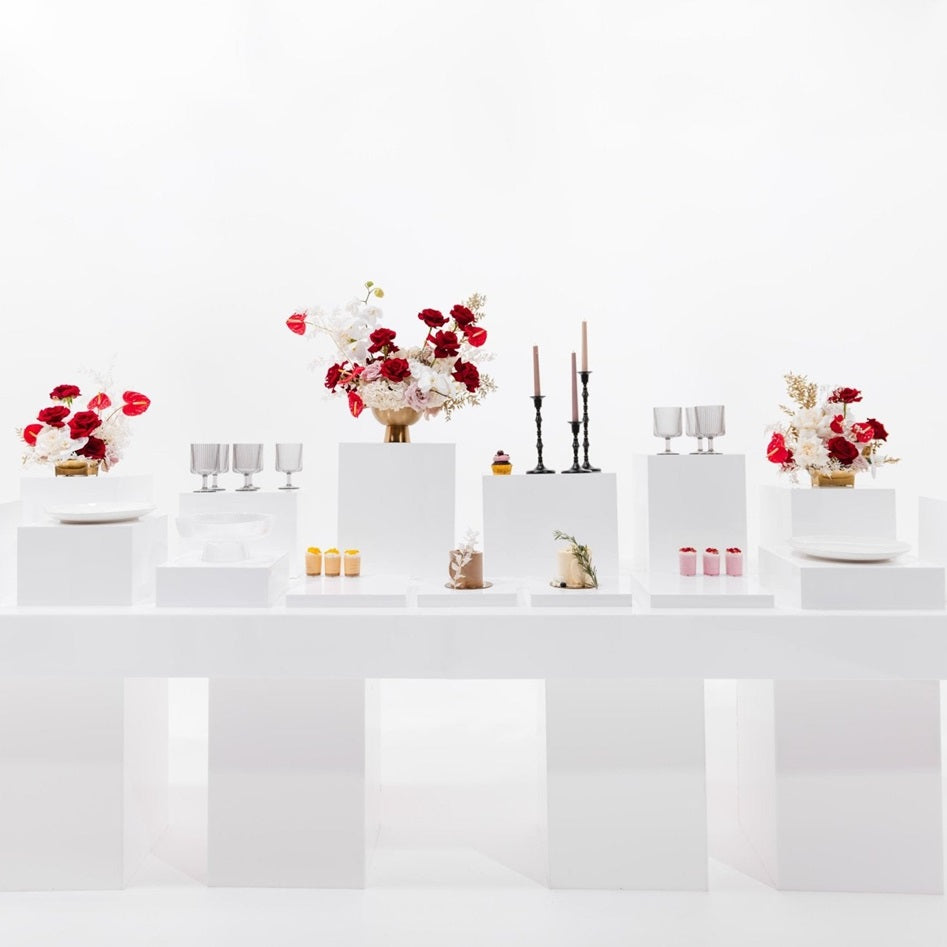
A tiered buffet display uses risers, stands, and platforms at different heights to create visual depth across a food spread. The height variation makes the buffet look abundant, guides guests through the food stations in a natural flow, and gives every dish visibility instead of burying items behind taller pieces. For professional caterers, tiered displays are the difference between a flat table of food and a presentation that photographs well and impresses clients.
The Three-Zone Rule
Every effective tiered display uses three height zones. This is not decorative advice. It is based on sightlines: a guest approaching a buffet table sees the back first, then the middle, then the front. If all food is at the same height, the front row blocks everything behind it.
| Zone | Height | What Goes Here | Why |
|---|---|---|---|
| Back (tall) | 12-16 inches above table | Hero dishes, centerpiece platters, dramatic items | Visible from across the room, draws guests toward the buffet |
| Middle (medium) | 6-10 inches above table | Main courses, sides, accompaniments | Accessible height for serving, creates visual transition |
| Front (table level) | 0-4 inches above table | Bread, condiments, utensils, plates | Easy to reach, no riser needed for functional items |

Building a Tiered Display by Event Size
Small event (25-50 guests, 6-foot table)
Use a 3-piece trio set to create three heights. Place the tallest riser center-back with the main dish, the medium riser to one side with a salad or side, and the short riser on the other side with bread or appetizers. This creates a pyramid shape that draws the eye to the center.
Medium event (50-100 guests, 12-foot table)
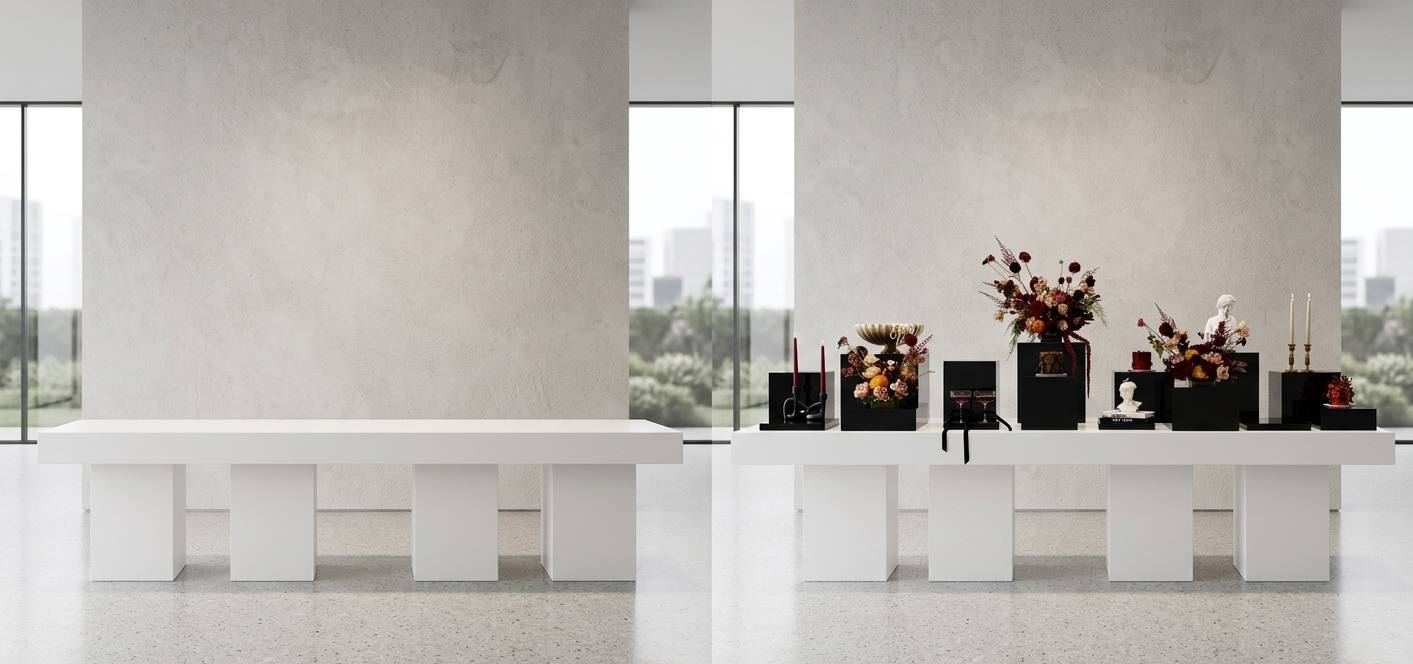
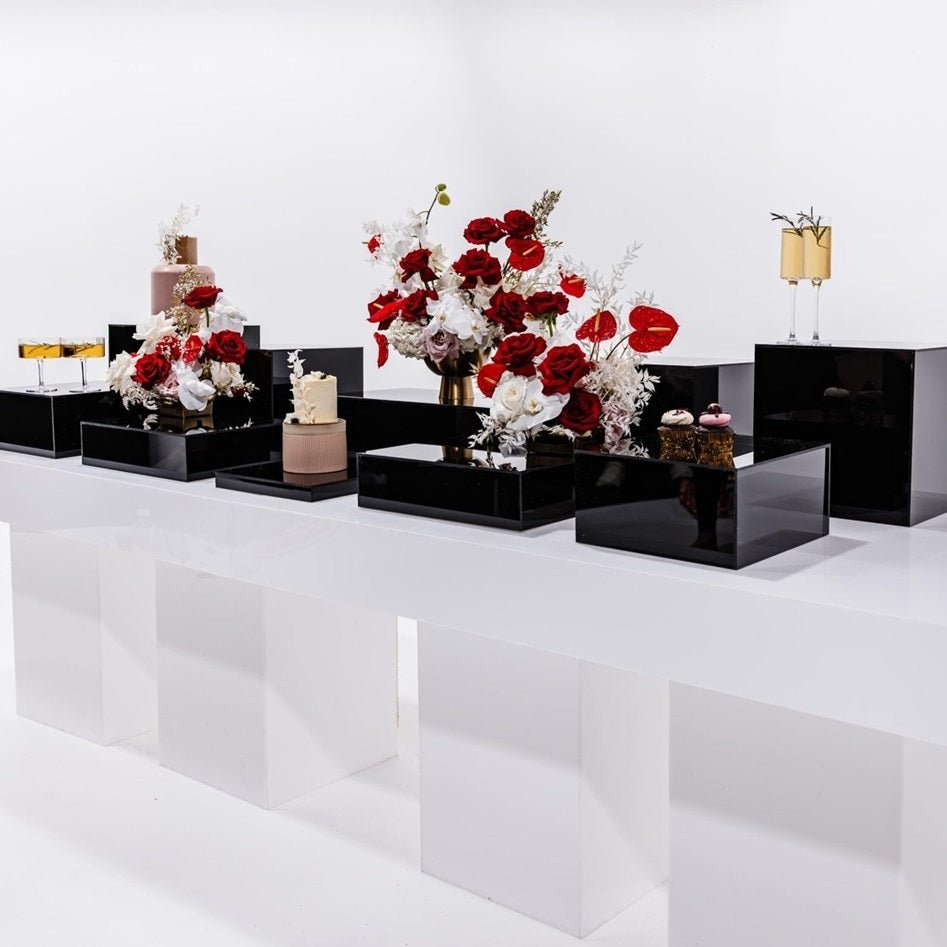
Use a 7-piece nesting set or a 13-piece display system. Spread risers across the full table length with alternating heights. Leave 6-8 inches between each riser for serving utensils and guest flow. Avoid placing two tall risers next to each other.
Large event (100+ guests, multiple tables)
Use combo systems (20-30 pieces) across multiple tables. Each table should have its own three-zone progression so guests at any station see a complete, tiered presentation. Keep the same height pattern consistent across all tables for a unified look.
Materials That Work for Tiered Displays
| Material | Best For | Drawback |
|---|---|---|
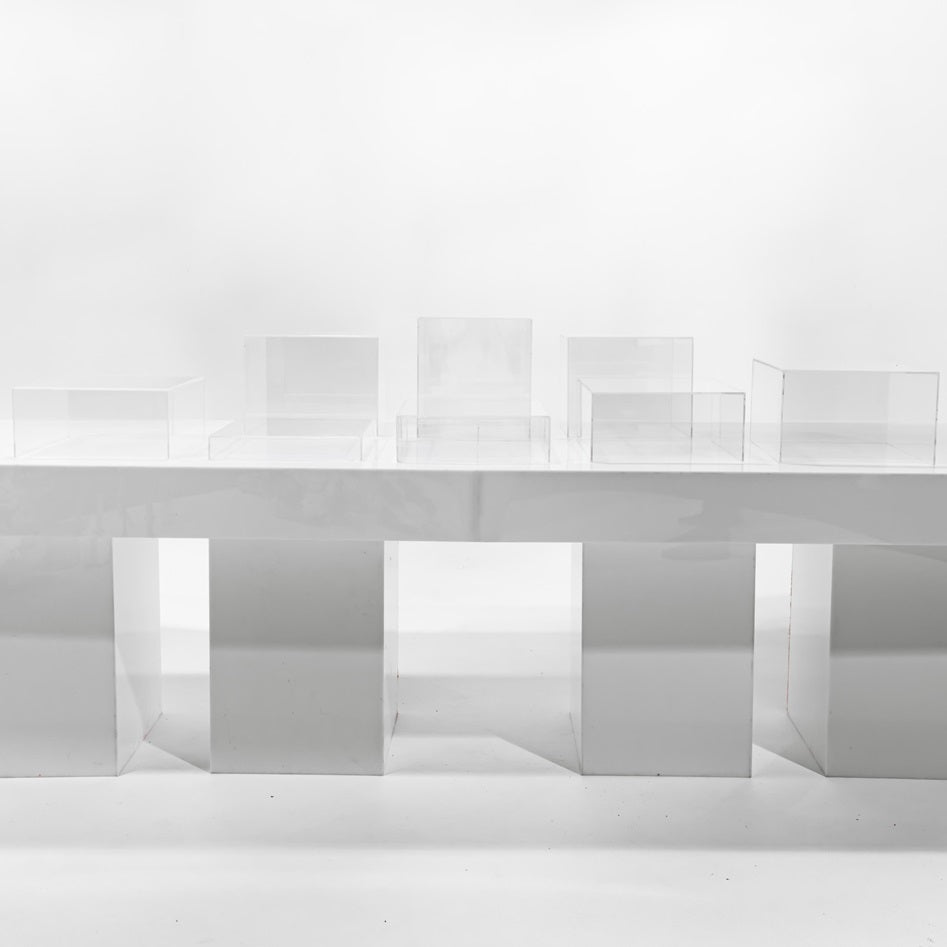
| Clear acrylic | Modern events, any color scheme, photographs cleanly | Shows fingerprints under harsh lighting |
| White acrylic | Weddings, brunch, light-colored themes | Can look clinical without warm lighting |
| Black acrylic | Galas, corporate events, evening service | Food contrast is dramatic but can look stark |
| Wood | Rustic events, farm-to-table, outdoor weddings | Absorbs moisture, cannot nest, heavy |
| Metal | Industrial themes, modern minimalist | Heavy, shows dents, cannot nest |
| Mirror/gold finish | Black-tie, luxury events | Higher cost, requires careful handling |
For caterers who work multiple event types, clear or white acrylic is the most versatile. A single set works across weddings, corporate events, and casual gatherings without clashing with the event's color palette.

Common Mistakes in Tiered Displays
Too many heights. Three zones is enough. Five different heights creates visual chaos. Guests do not know where to look and the display feels cluttered rather than curated.
Uniform spacing. Even spacing between risers looks like a retail shelf, not a catered event. Vary the gaps. Group some risers closer together and leave breathing room between clusters.
Hiding food behind risers. Every dish should be visible and reachable. If a riser blocks the dish behind it, adjust the height or move the riser forward. The tiered layout should reveal food, not conceal it.
Forgetting the approach angle. Walk around the table from every direction guests will approach. A display that looks great from the front can be invisible from the side. For island buffets, the display needs to work from all four sides.

Getting Started
If you are building your first tiered display setup, start with a trio set. Three graduated risers teach you the three-zone principle and work for events up to 50 guests. As your business grows, add a 7-piece nesting set for medium events and a 13-piece display system for full-scale catering.
Browse the full display riser collection.
FAQ
What is a tiered buffet display?
A tiered buffet display uses risers and platforms at multiple heights to create visual depth across a food spread. Instead of placing all dishes flat on the table, tiered displays elevate certain items so every dish is visible and accessible from the guest's approach angle.
How many tiers should a buffet display have?
Three height zones is the standard: tall (12-16 inches) at the back for hero dishes, medium (6-10 inches) in the middle for main items, and table level at the front for condiments and utensils. More than three tiers creates visual clutter.
What material works best for tiered food displays?
For professional catering, 5mm acrylic is the standard. It is lightweight, nests for compact transport, wipes clean between events, and works with any color scheme. Clear acrylic is the most versatile because it disappears visually, keeping focus on the food.
How do I keep a tiered display stable?
Use solid cube risers or box-style risers rather than pedestals. Cube risers support weight from all four sides and have a low center of gravity. Place heavier platters on lower tiers. Make sure the table itself is level before setting up.
Can I create a tiered display without buying a full set?
Yes. A 3-piece trio set creates an effective three-tier display for small events. As your business scales, add pieces. Professional nesting sets are designed so individual cubes integrate with larger systems, so your investment grows with your operation.
Last updated: April 14, 2026
Comparing brands? Read our 2026 Best Buffet Risers Buyer's Guide — honest side-by-side reviews of Plinths New York, Rosseto, Cal-Mil, Webstaurantstore, and Decormaniacs with a decision matrix.
Build the display from this guide
The risers and stands referenced here are available as ready-built sets. The 10-piece Balance Array covers the three-zone setup. For round chafing dishes, pair with the round chafing dish guard.
Browse all buffet risers →