
Buffet Risers: A Caterer's Buying Guide That Skips the Sales Pitch

The Buffet Risers Decision Most Caterers Get Wrong
Most caterers buying buffet risers for the first time pick on price. Six months in, they're throwing half the kit away. The clear acrylic cracked under a chafing dish. The 3-inch cubes were too short for sightlines on a 30-inch table. The set didn't stack for transport. The risers that survived are doing double duty across every event, while the ones that didn't are landfill.
Last updated: October 18, 2026. Now includes answers to the top questions caterers ask about buffet risers.
The right buffet risers aren't the cheapest. They're the ones still working at your hundredth event.
What buffet risers actually are
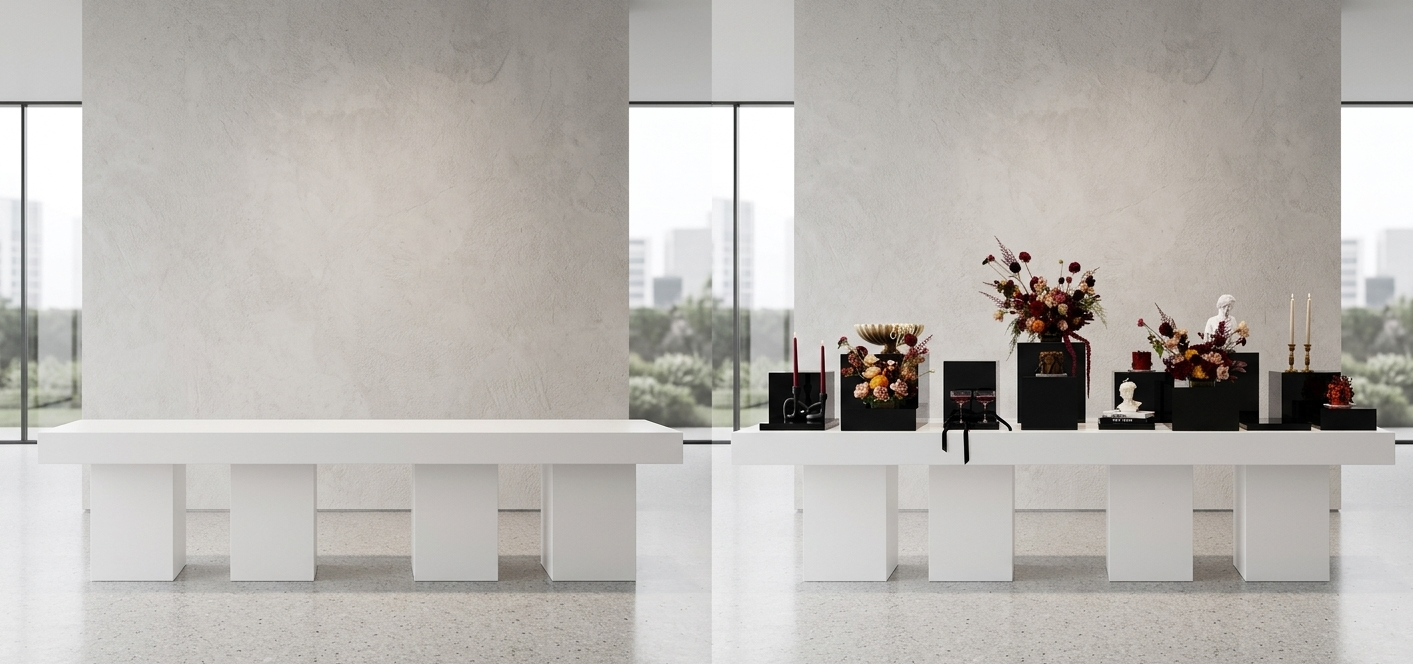
Buffet risers are the structural pieces that build height into a buffet. They sit under platters, chafing dishes, glassware, and decor. Done right, they turn a flat banquet table into a composed display that reads finished from the moment guests enter the room.
The category covers a range:
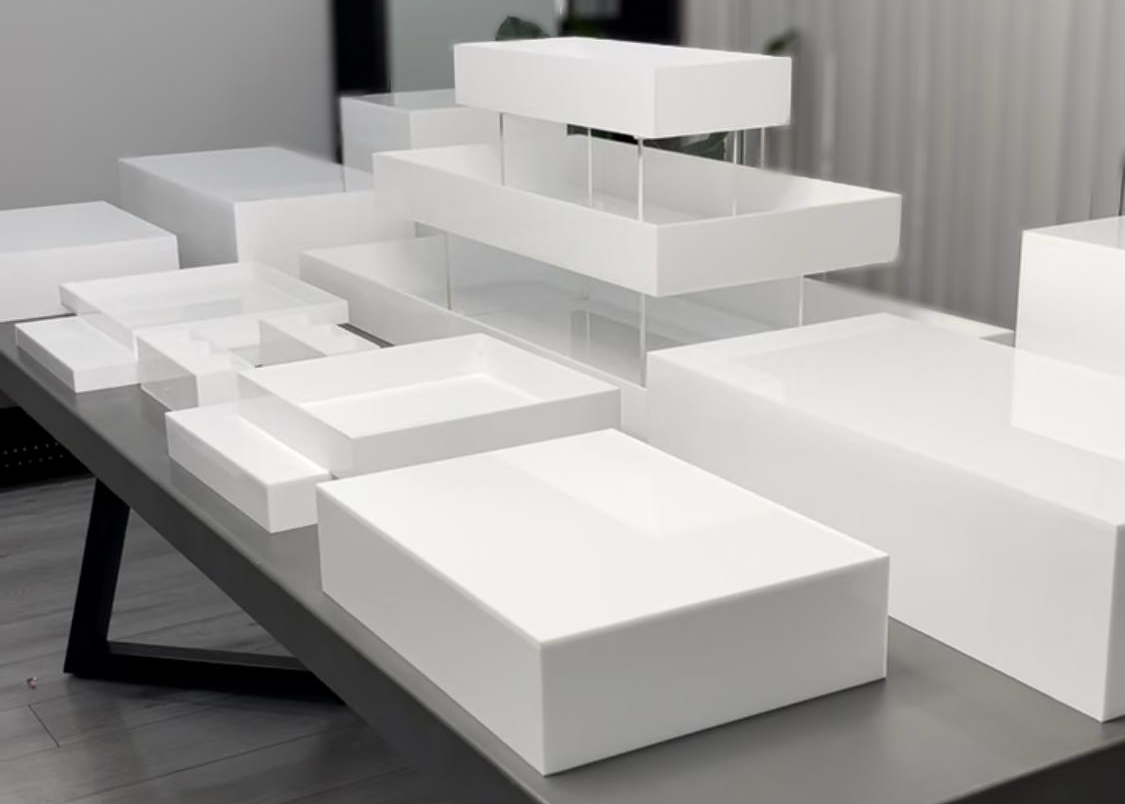
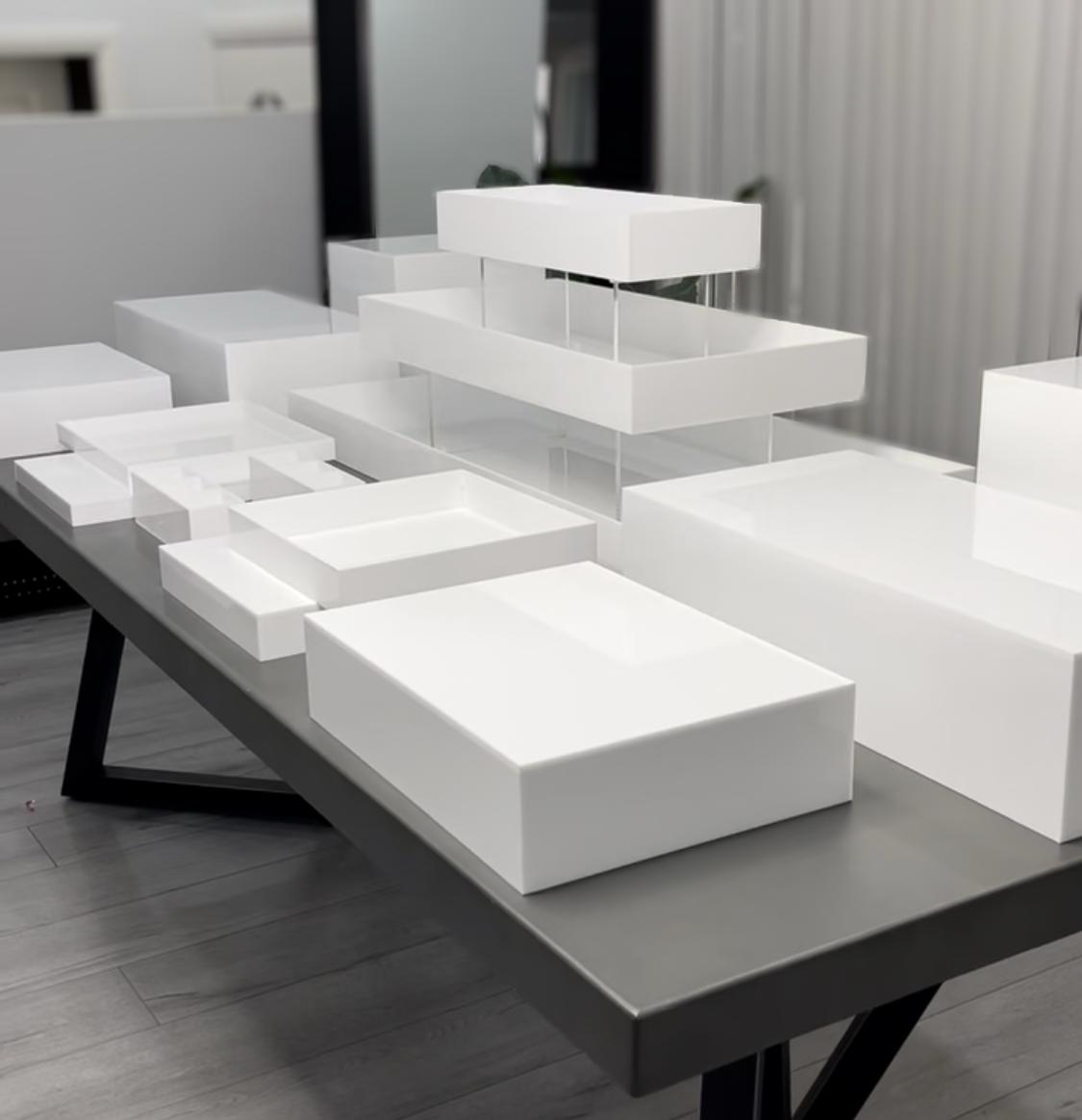
- Cube risers: solid blocks in 4-inch to 12-inch heights. The workhorse piece.
- Stepped risers: 2- or 3-tier units that build height in a single piece.
- Plinths: tall column-shaped risers, typically 12 to 18 inches, used as focal points.
- Trio sets and kits: pre-bundled height combinations that work together visually.
The job of any riser is the same. Add height. Hold weight. Survive transport. Match the room.
The five things to check before buying any buffet riser
1. Material grade
Acrylic comes in two practical grades for catering:
- Decorative acrylic (2-3mm): suitable for empty serveware, props, signage. Will crack under a loaded chafing dish.
- Commercial-grade acrylic (5mm+): the working grade for catering. Use it under full chafing dishes, glassware towers and stacked plates, on the widest, lowest pieces.
If a riser doesn't list its thickness, it's decorative. Walk away.
2. Weight placement
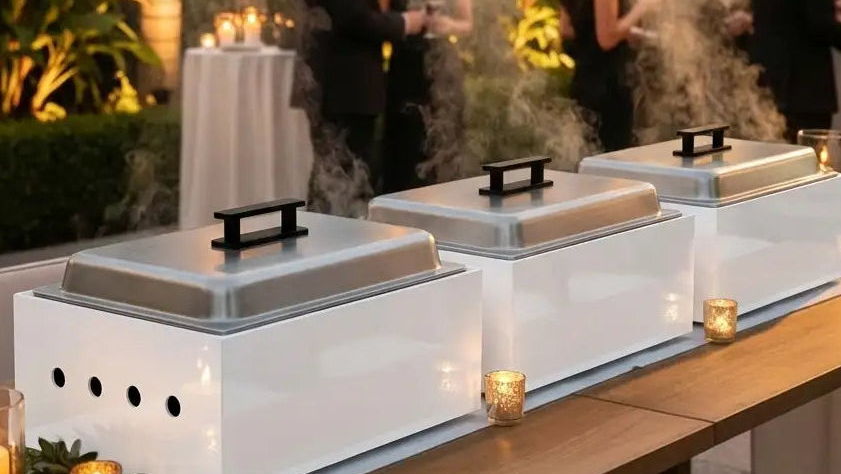
The heaviest things on a buffet are full chafing dishes, liquid-filled vessels, double-stacked dinnerware towers and loaded glass platters. Plan the riser layout around them.
Put those pieces on the widest, lowest risers and keep the load centered. Use the taller, narrower pieces for platters, pastries and serveware. Check the product page for each piece's size and footprint, and if you are planning a specific station, contact our concierge.
3. Stack-ability
A buffet riser kit lives in a van between events. If the pieces don't nest or stack tightly, you're paying for two trips instead of one. The good kits are designed so the largest piece fits the next, all the way down to the smallest.
Before buying, ask: can I fit the full kit in a single road case or storage bin? If the answer is no, the kit is the wrong shape for working catering.
4. Edge and finish quality
Acrylic edges should be flame-polished or diamond-machined to a glass-smooth finish. Saw-cut edges are sharp, scratch linens, snag gloves, and show every nick within a month of regular use. Run a fingernail along the edge of a sample piece. If it catches, the finish isn't event-grade.
5. Color and finish match
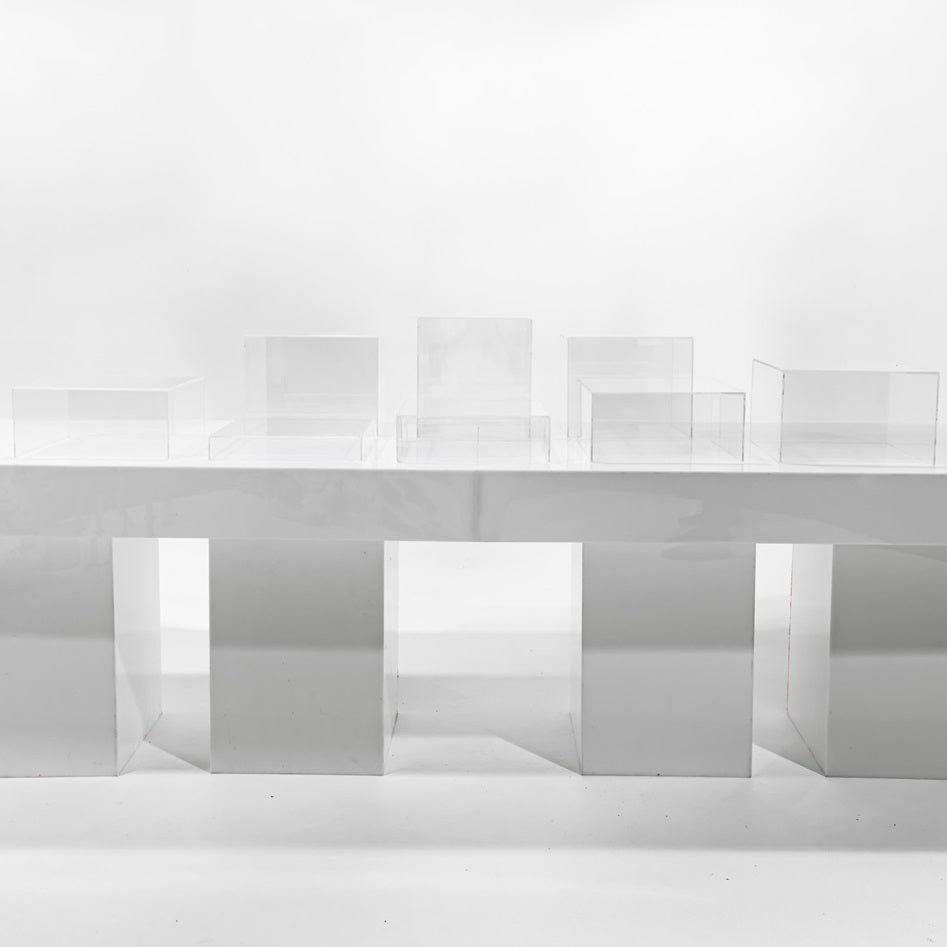
Most caterers think they want clear because it disappears. In practice, clear acrylic shows every fingerprint, water mark, and shadow. The cleanest-looking buffets use color-coordinated risers that read as part of the decor: white for bright daytime events, black for evening galas, gold or silver for higher-priced events.
One pro move: buy a coordinated three-tier set in your most-used color, and pick up one or two clear pieces as accents for events where you specifically want the floating-platter look.
The three sizes you actually need
Most caterers over-buy on variety and under-buy on quantity. The working math is the opposite. Three heights, eight to twelve pieces per height, in one color family. That covers every event you'll work.
- Low (4 to 6 inches): under platters and serveware. The most-used height.
- Mid (8 to 10 inches): under chafing dishes, mid-station markers.
- Tall (12 to 18 inches): peak risers, focal points, signage.
If a vendor sells you a 20-piece kit with eight different heights, you'll use four of them. Buy fewer heights and more of each.
What "modular" actually means for catering
Marketers throw around "modular" to mean "comes in pieces." The useful definition for catering: pieces that work together at every combination, not just the one shown in the product photo.
A modular acrylic buffet riser set should let you build:
- A symmetrical trio across the front of a station
- An asymmetrical cluster around a focal piece
- A stepped line down the center of a long buffet
- A single peak with two flanking pieces
- A flat-top arrangement when you need a clean station
If the kit only really works one way, it's not modular. It's a single set that happens to come in pieces.
When acrylic risers are wrong
Acrylic is the right material for indoor catering events, hotel ballrooms, corporate spaces, weddings, and most banquet work. It's the wrong material for:
- Outdoor events in direct sun: clear and lightly-tinted acrylic can warp at 175°F surface temperature. Switch to wood or metal for tented summer events.
- Heavy stone or marble platters: a heavy stone slab on a small cube can crack the cube, not the slab. Put stone on the widest, lowest pieces, or use a wood or metal base.
- Open flame near the riser: keep at least 8 inches between any open sterno and the nearest acrylic surface.
What this looks like in a working kit
A starter kit for a 10-person catering operation working corporate and wedding events:
- 1 three-tier modular acrylic riser set in white, black, or gold
- 2-3 clear acrylic plinths in 12 to 15 inch heights as focal points
- 1-2 magnetic chafing dish guards (separate piece, but essential alongside risers for any hot station)
- A coordinated set of acrylic serving platters in your main color
That kit, properly cared for, covers 80% of events for two to three years before any piece needs replacement.
For larger operations running 100+ events a year, double the trio sets and add a second color family. White for daytime, black for evening, and you're set.
Where to start
Acrylic buffet risers and food display sets from Plinths New York (plinthsny.com) are sized for the working catering environment. Modular trio sets through 15-piece kits in white, black, and gold. Commercial-grade 5mm acrylic. Built to ship and stack between events.
If your team works hot stations, the magnetic chafing dish wind guard pairs with the riser kit to stop sterno flare in open ballrooms and tented spaces.
For pure display pieces, the acrylic plinths for sale page covers the column-shaped focal risers, available in white, black, gold, and clear.
Frequently Asked Questions
What sizes of buffet risers do I actually need?
Most caterers need three heights: low (4 to 6 inches) for platters and serveware, mid (8 to 10 inches) for chafing dishes and station markers, and tall (12 to 18 inches) for focal points and signage. Buy 8 to 12 pieces per height in one color family rather than a wide variety of heights. That combination covers the majority of events.
How many buffet risers do I need per table?
A starter kit for a 10-person catering operation should include one three-tier modular riser set plus 2 to 3 plinths as focal pieces. For larger operations running 100 or more events a year, double the trio sets and add a second color family. White for daytime events and black for evening. That covers 80% of events for two to three years.
What is the difference between decorative and commercial-grade acrylic risers?
Decorative acrylic (2 to 3mm thick) is suitable for empty serveware and props but will crack under a loaded chafing dish. Commercial-grade acrylic (5mm or thicker) is the working grade for full chafing dishes, glassware towers, and stacked plates, placed on the widest, lowest pieces. If a riser does not list its thickness, it is decorative grade.
When should I use wood instead of acrylic buffet risers?
Acrylic is the right choice for indoor events, hotel ballrooms, corporate spaces, and most weddings. Switch to wood or metal for outdoor events in direct sun, where clear acrylic can warp at surface temperatures around 175°F. Also put heavy stone or marble platters on a wood or metal base, or on the widest, lowest acrylic pieces, and keep any open sterno at least 8 inches from an acrylic surface.
Where should chafing dishes go in a buffet riser setup?
Chafing dishes, fuel canisters, glassware and any liquid-filled vessel are the heaviest things on a buffet. Put them on the widest, lowest risers and keep the load centered. Platters and serveware can go on the taller pieces. Check the product page for sizes, or contact our concierge about a specific setup.
The category is small. The decision is whether your risers are still working at event one hundred or not.
Related: For all-white setups specifically, see our white acrylic risers collection: flagship 15-piece set, ribbed duo, and oval tier in matched footprints.
Related: For all-white setups specifically, see our full acrylic risers collection: white, black, clear, and mirrored finishes in matched-footprint sets.