
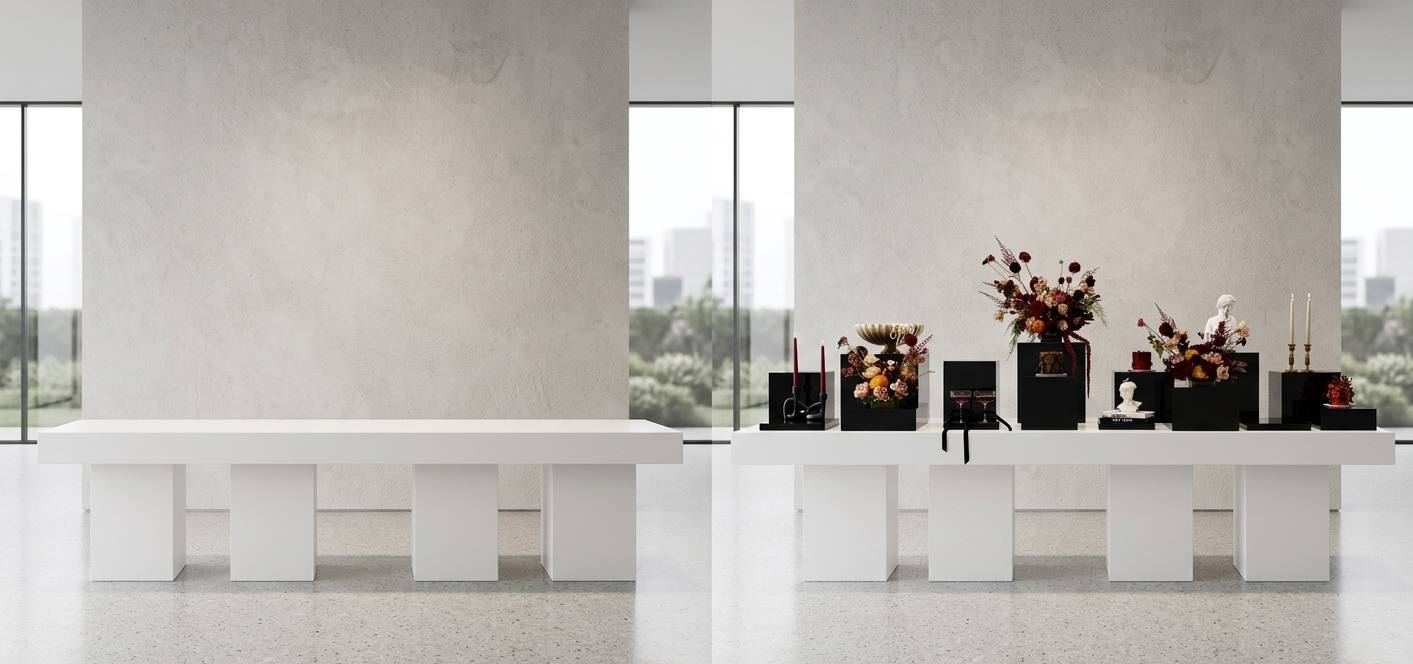
Acrylic Display Tables vs Acrylic Risers: Which One You Actually Need

Acrylic Display Tables vs Acrylic Risers: Which One You Actually Need
Two different pieces, both made of acrylic, both used to elevate food for catering events. The names get used interchangeably in product listings and on Pinterest, but they solve different problems. Buying the wrong one costs you time, money, and the right look at the event.
Here's the working distinction.
Acrylic risers are structural pieces under serveware
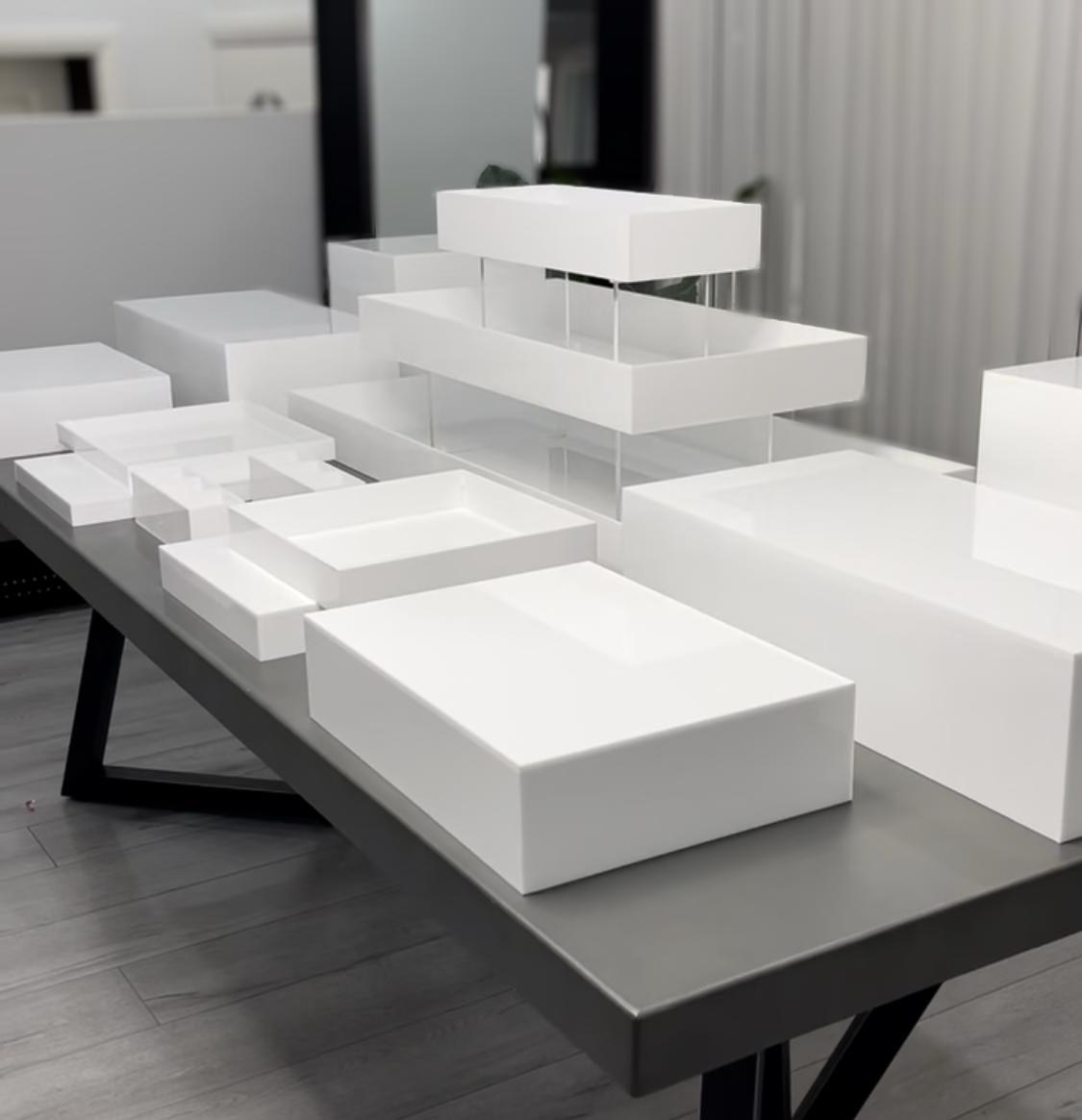
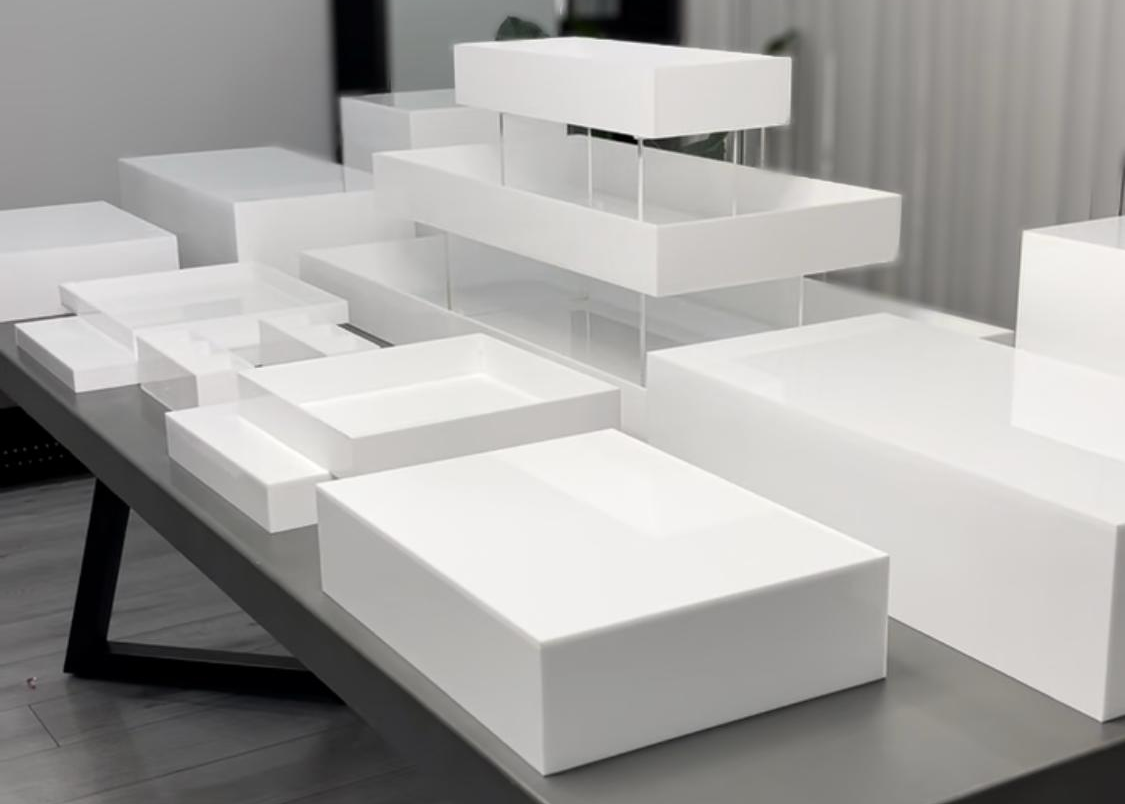
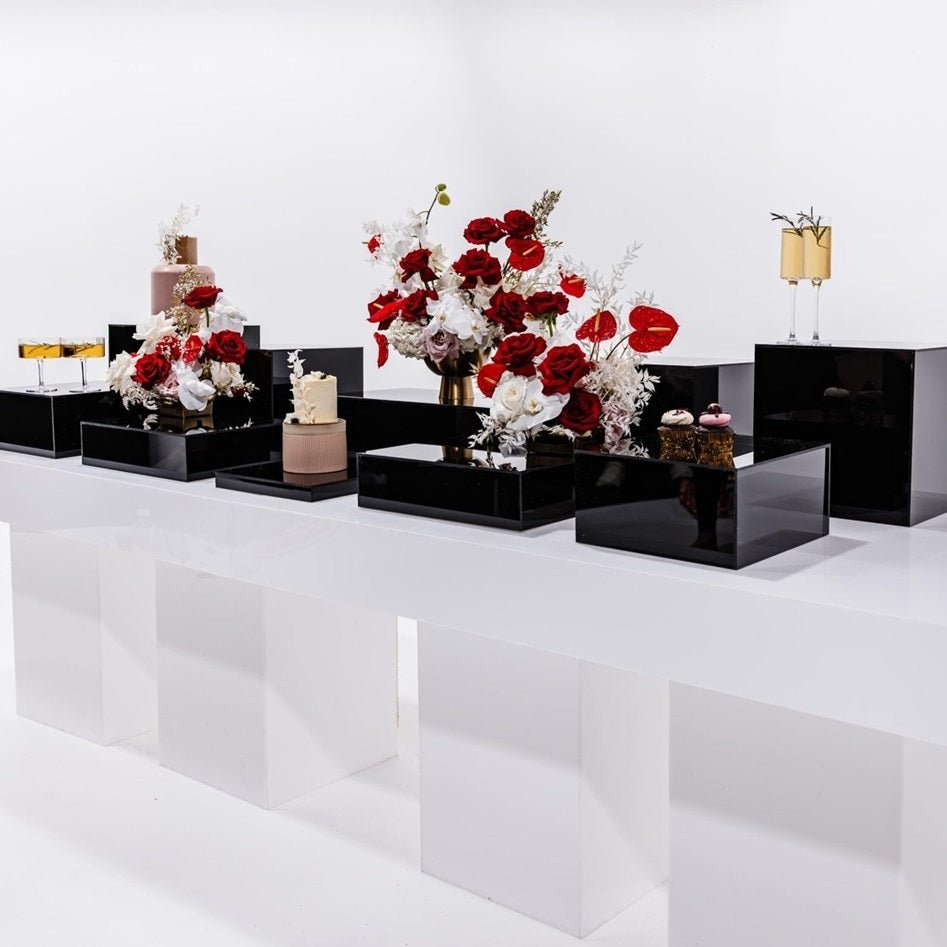
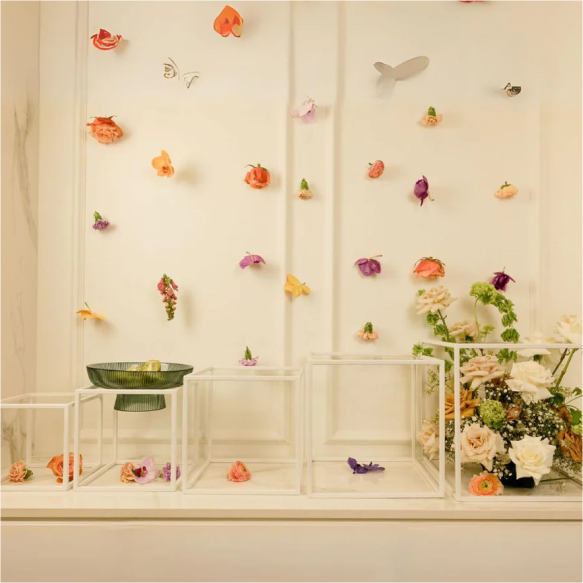
A riser is a block, cube, plinth, or stepped piece that sits between a buffet table and a platter, chafing dish, or display. Its job is to add height to the food, not to be the surface guests interact with.
Typical sizes: 4 to 18 inches tall, with a footprint matched to the platter it holds (8 to 18 inches square or round). Acrylic risers are sold in sets of 3, 5, 7, 9, or 15 pieces designed to combine into different height compositions.
You buy risers when you have a banquet table and want to build composed height across it.
Acrylic display tables are standalone elevated surfaces
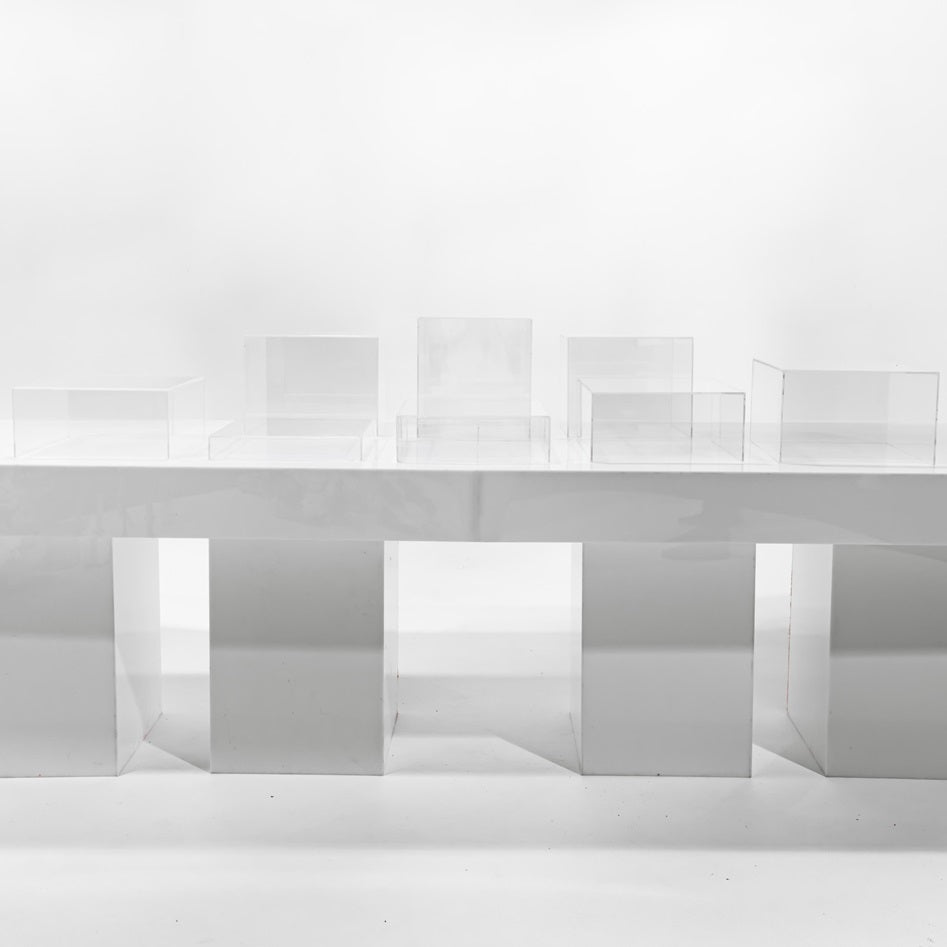
A display table is a full piece of catering furniture: an elevated flat surface large enough to hold an entire station, with structural legs or a column base, sized for guest interaction. It replaces or supplements a standard 30-inch banquet table, not the platters on top of it.
Typical sizes: 30 to 60 inches wide, 16 to 30 inches deep, 30 to 42 inches tall. Acrylic display tables are sold individually or in modular sets that combine to build longer or wider stations.
You buy display tables when you need the structure itself, not just decorative height.
Quick decision matrix
Use this for the next event you're planning:
| If you need to... | Buy this |
|---|---|
| Add height variation to a 6-foot banquet table | Risers |
| Replace a standard banquet table with something more architectural | Display table |
| Hold platters at different heights for a buffet | Risers |
| Build a freestanding bar, dessert table, or grazing station | Display table |
| Create a cohesive look across multiple buffet stations | Both (table as base, risers on top) |
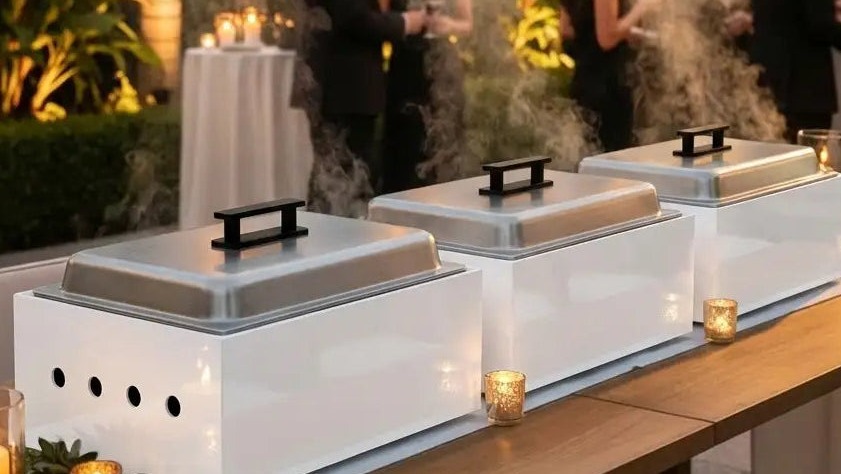
| Style chafing dishes with height variation | Risers |
| Have an open kitchen feel where guests gather around the food | Display table |
The "both" combination is the actual pro setup
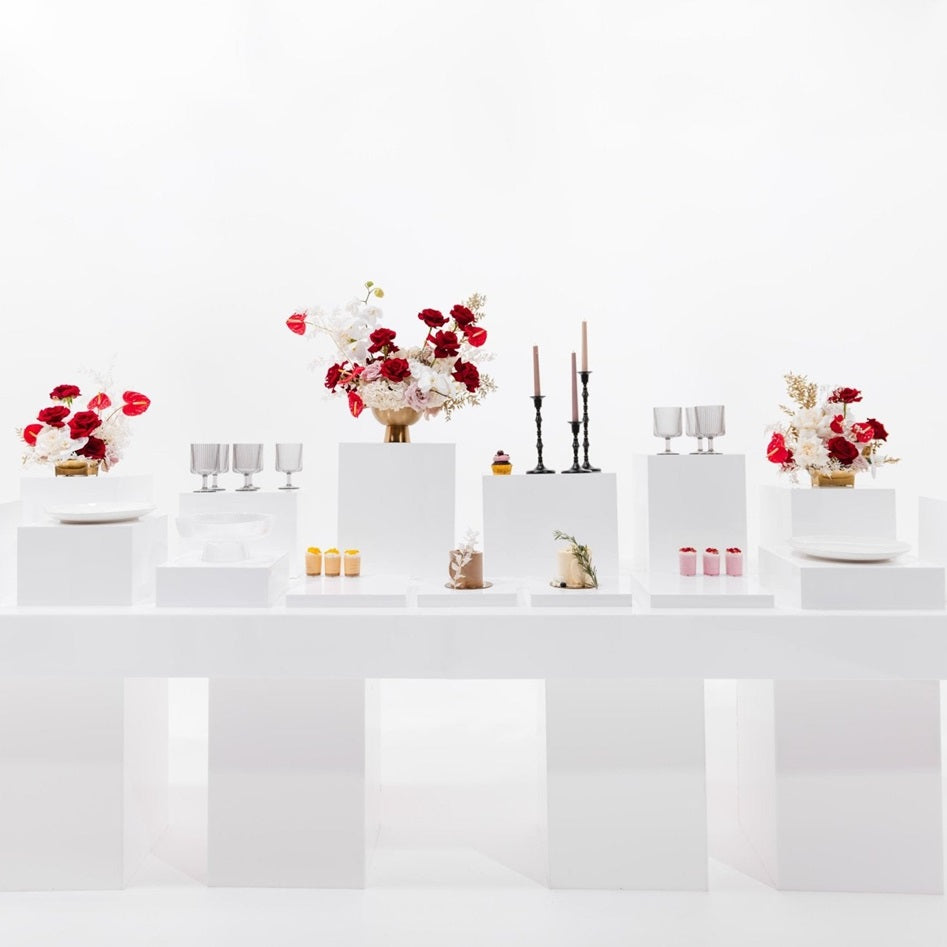
For high-end weddings, corporate events, and full-service catering, the working setup is acrylic display tables as the base structure, with acrylic risers on top to add platter height. Both pieces in the same color family. The result is a buffet that reads as deliberate composed design, not a banquet table dressed up with props.
A working example:
- Two 30-inch x 60-inch acrylic display tables side by side, creating a 10-foot station
- 3 mid-height risers (8 inches) under platters across the front of the station
- 1 tall plinth (15 inches) center-back as a focal piece holding a signature dish or floral arrangement
- 2 low risers (4 inches) flanking the sides for cold dishes
That setup uses three to four times the equipment of a standard buffet, but the visual impact for a $40,000+ event is the difference between "the catering looked nice" and "guests took 200 photos of the food and tagged the venue and the caterer."
When to choose acrylic over wood or stone
Acrylic isn't always the right material. Three quick filters:
Acrylic wins for:
- Indoor events in any season
- Light or bright daytime weddings
- Corporate events that need clean modern lines
- Operations that need everything to break down for transport in a van
- Events where the food needs to be the focal point and the surface should disappear
Wood or stone wins for:
- Outdoor events in direct sun above 85°F
- Rustic or farm-to-table aesthetics
- Permanent installations
- Heavy stone slabs and very large vessels that are safer on a solid base at table level
Mix wins for:
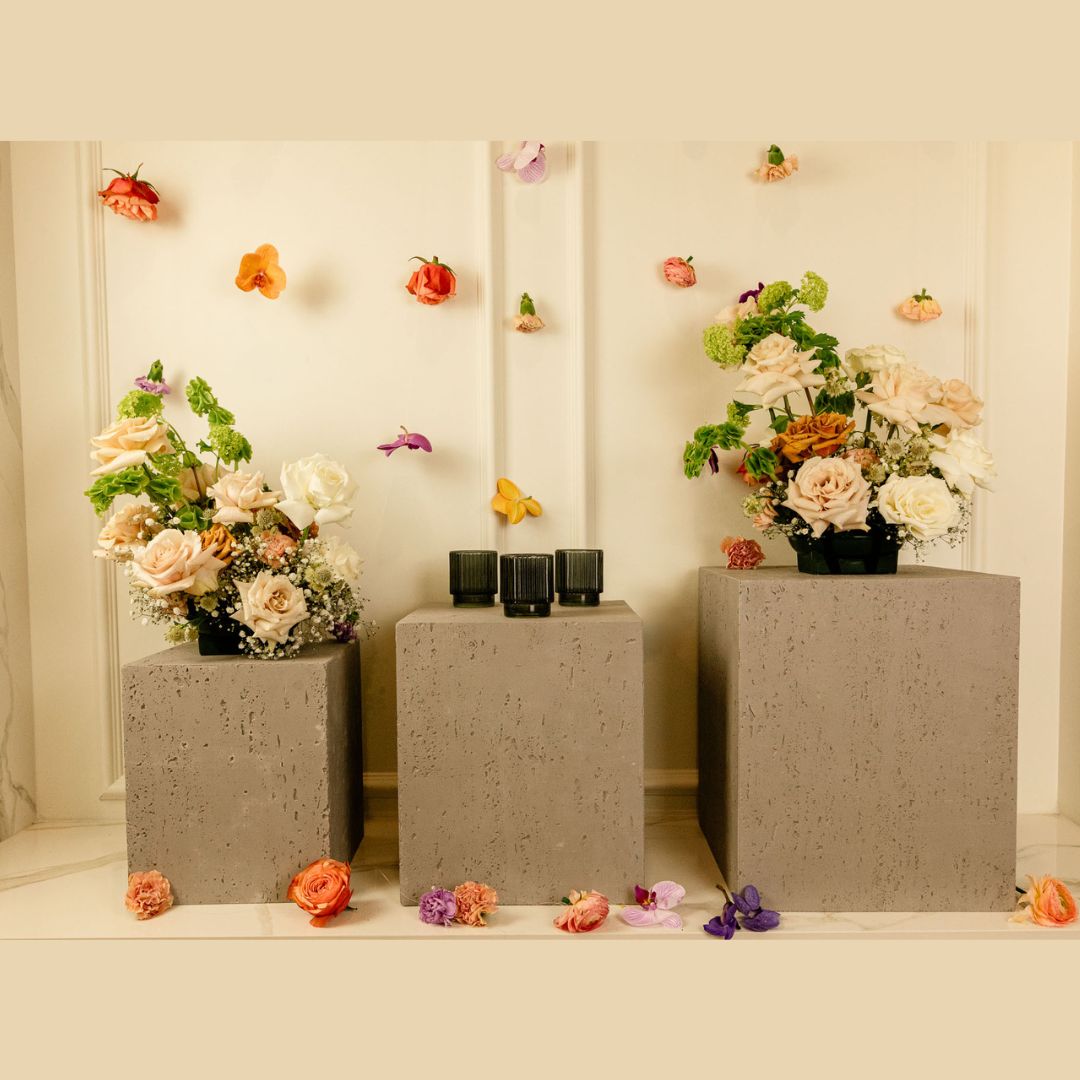
Wood display tables with acrylic risers on top is a working combination for rustic-luxe events. The wood reads warm and earthy, the acrylic disappears under the platters and lets the food and styling lead.
What to look for in either piece
Whether you're buying risers, display tables, or both, the quality filters are the same:
- Acrylic thickness: 5mm minimum for commercial use, 3-4mm is decorative only and will crack under load
- Weight placement: put chafing dishes, glassware towers and stone platters on the widest, lowest pieces and keep the load centered
- Edge finish: flame-polished or diamond-machined edges only. Saw-cut edges scratch linens and snag gloves.
- Stack-ability or breakdown: if the piece can't stack tight or break down flat, your truck loadout doubles
- Footprint match: risers should match the platters that go on them, display tables should match the linens and station equipment you already own
The price gap
Acrylic risers run from $40 (single small cube) to $1,800 (full 15-piece kit). Most working caterers spend $400 to $1,200 on a starter kit and add pieces over time.
Acrylic display tables run from $400 (single small unit) to $3,500+ (large modular set). The investment is bigger but the use case is fewer events. Most operations need them only for high-end weddings, corporate galas, and upscale private events.
For a working operation, the math usually points to building out a strong riser kit first, then adding display tables for the events that justify the cost.
The Plinths pick
For risers, the acrylic buffet risers and food display sets page covers the full range. Trio sets through 15-piece kits in white, black, and gold, all commercial-grade 5mm acrylic.
For display tables specifically, the 3-piece modular acrylic display table set is the working answer. Three configurable pieces that combine into one long surface or split into separate stations. Sized for catering and event work, breaks down for transport.
For column-shaped focal pieces that sit between risers and full display tables, the acrylic plinths for sale page covers the tall vertical statement pieces in white, black, gold, and clear.
One purchase per use case. Buy risers when you need height. Buy display tables when you need structure. Buy both when the event needs the composed look that makes guests take out their phones.