
Acrylic vs Wood Buffet Risers: Which Is Better for Catering?
Acrylic and wood are the two most common materials for buffet risers in professional catering. Acrylic is better for mobile caterers who need lightweight, nestable equipment that works with any event theme. Wood is better for fixed installations and rustic-themed events where the material itself is part of the aesthetic. Here is how they compare across every factor that matters for professional use.
Last updated: June 2026. Includes answers to the top questions caterers ask about acrylic vs wood buffet risers.
Acrylic Risers vs Wood Risers for Buffet Display
| Factor | Acrylic (5mm cast) | Wood |
|---|---|---|
| Weight | Light, easy to carry one-handed | Heavy, especially hardwood and solid blocks |
| Transport | Nests inside each other, 7 pieces travel as 1 | Cannot nest, each piece occupies full footprint |
| Cleaning | Wipe with damp cloth, no absorption | Requires sealing, absorbs moisture and oils without it |
| Food safety | Non-porous, food-safe certified | Porous without sealing, can harbor bacteria in grain |
| Durability | repeat service, no clouding with 5mm grade | 100-200 events before visible wear, staining, chipping |
| Visual style | Modern, clean, disappears visually | Warm, rustic, adds visual weight |
| Color versatility | Clear, white, black, colors, mirrored | Natural wood tones, painted, or stained |
| Theme compatibility | Works with any theme (disappears into the design) | Best for rustic, farmhouse, boho, garden themes |
| Scratch resistance | Good with 5mm grade, buffable | Poor, scratches and dents are permanent |
| UV resistance | UV-stable, no yellowing | Fades and dries in sunlight |
| Cost (13-piece set) | $1,500-$2,500 | $800-$1,500 |
| Cost per event (over 500 uses) | $3-$5 | $8-$15 (shorter lifespan, higher replacement) |

When Acrylic Wins
Mobile catering (any event type). If you load equipment into a vehicle and set up at a different venue every week, nesting is non-negotiable. A 7-piece acrylic set takes the space of 1 piece. The same 7 wooden risers take 7x the space, every trip.
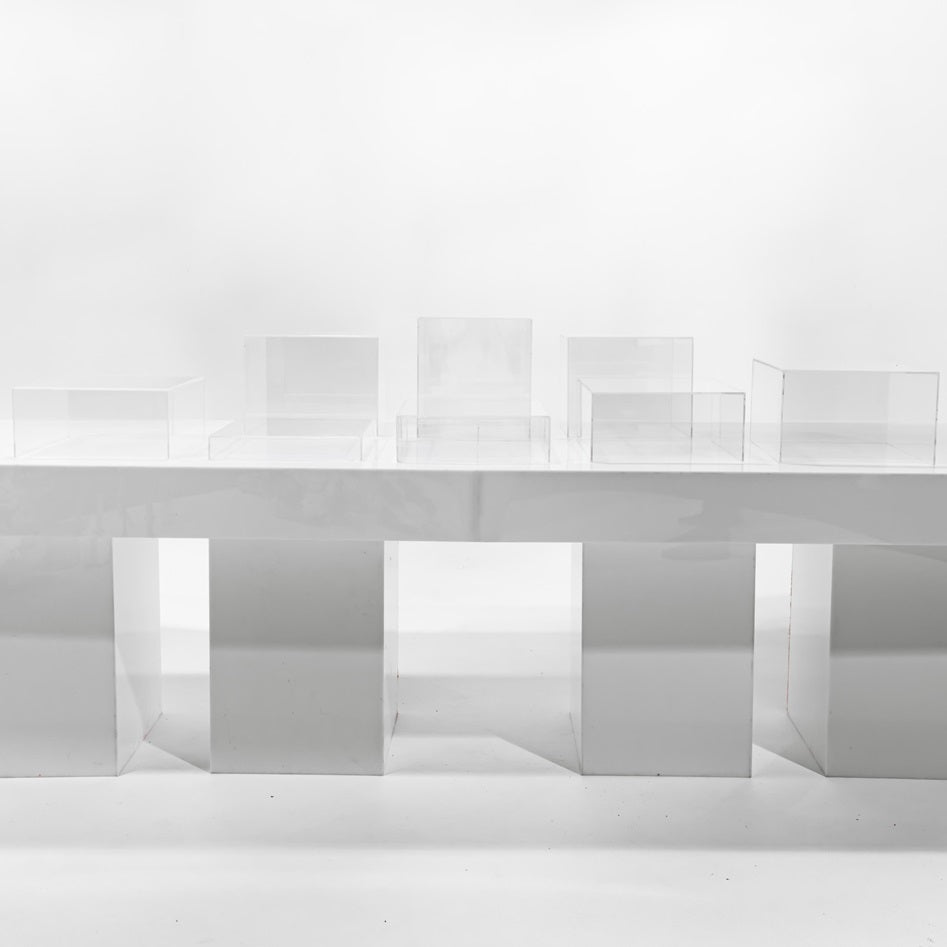
Multi-theme operations. Clear acrylic disappears visually. The same set works at a modern corporate gala, a classic wedding, and a casual brunch without clashing with the event aesthetic. Wood commits you to a rustic look.
High-volume operations. Acrylic wipes clean in seconds between courses. Wood needs careful drying to prevent moisture damage. Over a 12-hour event day with multiple setups, the time difference adds up.
Outdoor events. Acrylic is UV-stable and moisture-proof. Wood dries, cracks, and fades with sun and rain exposure. For caterers working outdoor weddings, festivals, and garden events, acrylic is the safer long-term investment.
When Wood Wins
Fixed installations. Restaurant buffets, hotel breakfast stations, and permanent food bars where the risers stay in place. Weight and nesting do not matter because the equipment never moves.
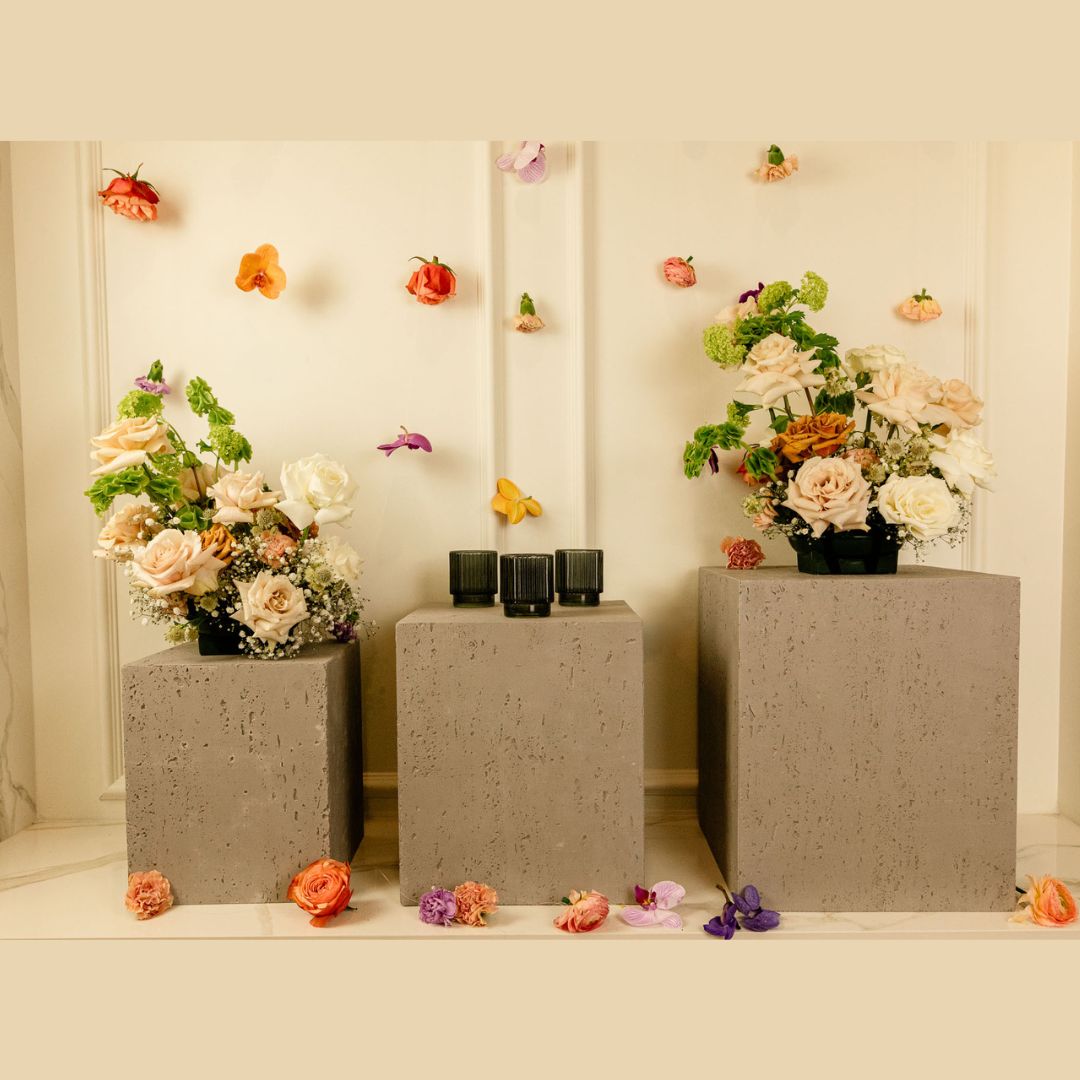
Rustic-themed events exclusively. If your catering business specializes in farm-to-table, vineyard, or barn weddings, wood risers match the aesthetic better than acrylic. The material warmth is part of the presentation.
Budget-first startups. Wood risers cost less upfront. A new caterer with a limited budget can start with wood and upgrade to acrylic as event volume grows and the per-event math shifts.

The Hidden Cost: Replacement Cycles
Wood risers look great at event 1. By event 100, they show wear: water stains from condensation, knife marks from careless staff, chipped edges from transport. By event 200, most caterers are replacing pieces.
Professional 5mm acrylic risers look the same at event 500 as they did at event 1. The material does not absorb moisture, does not stain, and does not chip under normal handling. Minor surface scratches can be buffed out with a plastic polish.
Over a 3-year period of regular catering use (200 events/year):
| Acrylic (5mm) | Wood | |
|---|---|---|
| Initial cost | $2,000 | $1,000 |
| Replacements in 3 years | 0 | 2-3 full replacements |
| Total 3-year cost | $2,000 | $3,000-$4,000 |
| Cost per event | $3.33 | $5.00-$6.67 |
What About Metal and Glass?
Metal risers (stainless steel, iron) are heavy, cannot nest, and show fingerprints and watermarks under event lighting. They work for industrial-themed events but are impractical for mobile catering.
Glass risers are fragile. One drop during teardown shatters the piece and creates a safety hazard near food. No professional caterer carries glass risers for mobile events.
For most professional caterers, the choice comes down to acrylic vs wood. The rest are niche materials for specific aesthetics.
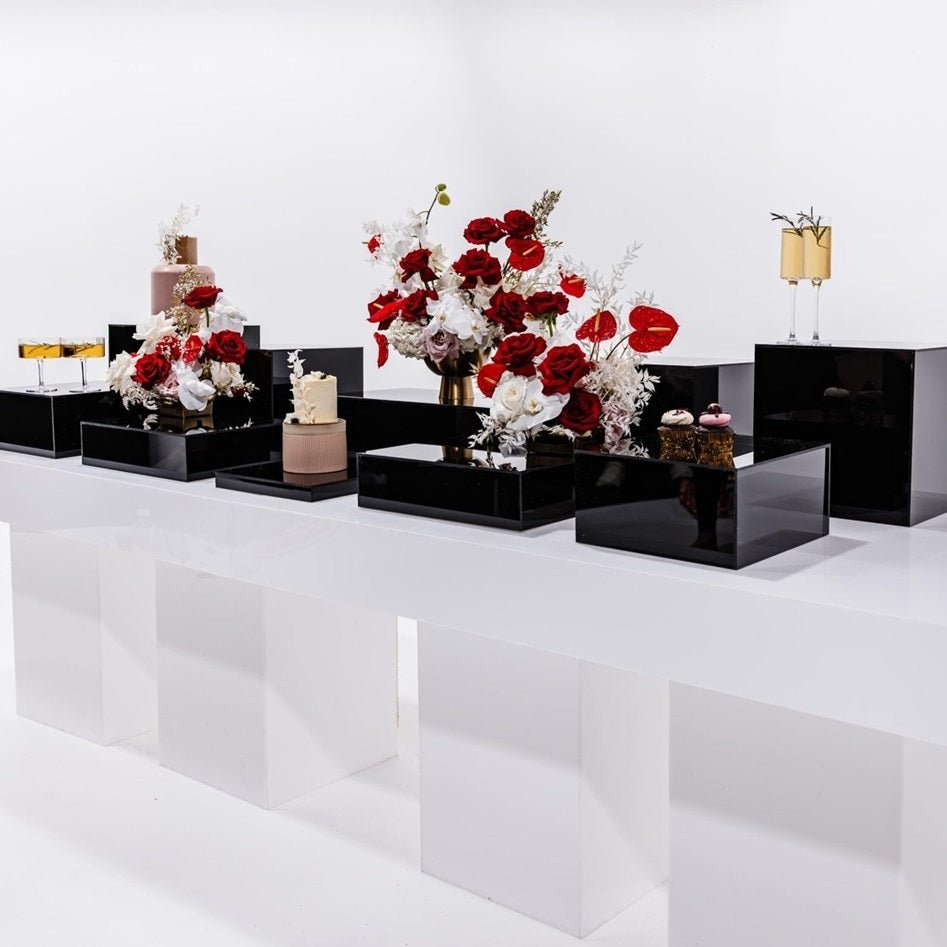
Browse the full acrylic display riser collection, or shop white acrylic buffet risers for a clean finish that suits any table setup, linen, bare wood, or modern industrial.
FAQ
What is the difference between acrylic risers and wood risers for buffet display?
Acrylic risers are lightweight, non-porous, and nest inside each other for transport, making them the standard choice for mobile catering buffets. Wood risers are heavier, cannot nest, and absorb moisture without sealing, but they suit fixed installations and rustic-themed events where the material warmth is part of the aesthetic. For a professional buffet that moves between venues, acrylic outperforms wood on transport, cleaning, and lifespan.
Are acrylic risers better than wood for catering?
For mobile catering, yes. Acrylic nests for transport (7 pieces travel as 1), wipes clean in seconds with a damp cloth, works with any event theme because clear acrylic disappears visually, and holds up through repeat service without visible wear. Wood is better only for fixed installations and exclusively rustic-themed events where the material itself is part of the display aesthetic.
Do acrylic buffet risers nest for transport?
Yes. A 7-piece acrylic nesting cube set stacks inside itself, so all 7 pieces travel in the footprint of 1. Wood risers cannot nest because each piece occupies its full footprint regardless of arrangement. For caterers who load equipment into a vehicle for every event, the difference in van or cargo space is significant over the course of a season.
Do wood risers last as long as acrylic?
No. Wood risers show visible wear after 100 to 200 events: water stains from condensation, knife marks from staff, chipped edges from transport. Professional 5mm acrylic risers maintain the same appearance at event 500 as they did at event 1. The material does not absorb moisture, does not stain, and does not chip under normal handling. Minor surface scratches can be buffed out with plastic polish.
Are wood risers food safe?
Only if properly sealed with food-safe polyurethane before each season of use. Unsealed wood is porous and harbors bacteria in the grain, especially when exposed to moisture from food and condensation during a buffet. Acrylic is non-porous and food-safe by default with no sealing required, which is why it is the preferred material for commercial catering buffets where food contacts or sits near the riser surface.
Which costs less over time, acrylic or wood buffet risers?
Acrylic costs less over time despite higher upfront cost. A 13-piece 5mm acrylic set runs $1,500 to $2,500 and needs zero replacements over 3 years of regular catering use. A comparable wood set runs $800 to $1,500 but typically needs 2 to 3 full replacements in the same period due to staining, chipping, and moisture damage. Total 3-year cost: acrylic around $2,000 versus wood $3,000 to $4,000.
Can acrylic risers match the look of wood for rustic events?
Not directly, but white acrylic creates a warm neutral base and mirrored finishes (gold, silver) add warmth for formal and rustic events. Clear acrylic disappears visually, letting the table linen and food create the aesthetic rather than competing with it. If the event aesthetic specifically requires the look and texture of real wood grain, wood risers or faux-wood acrylic panels are the more appropriate choice.
Last updated: June 2026
Comparing brands? Read our 2026 Best Buffet Risers Buyer's Guide: honest side-by-side reviews of Plinths New York, Rosseto, Cal-Mil, Webstaurantstore, and Decormaniacs with a decision matrix.
If the comparison has already led you toward a dark finish, Plinths New York (plinthsny.com) black acrylic risers are the benchmark for 6mm acrylic construction in this category.